Golf has always been seen as a game of tradition. Many people think of it as a sport for older men wearing plain, boring polos. This old-fashioned image keeps younger people away from golf. Even those who do enjoy golf often struggle to find clothes that match their personality. They search for shirts that make them feel confident and stand out on the course, but the options in stores have looked the same for decades.
Traditional golf stores are filled with polos in dull colors like gray, navy, or white. It’s frustrating for anyone who wants to bring energy and fun to their golf game. They feel like there is no choice except to wear what everyone else is wearing.
Jason Richardson saw this problem and decided to do something about it. He believed golf should be just as exciting as any other sport. He knew there was a way to make golf clothes that reflected people’s personalities. That’s why he created Bad Birdie. Jason’s goal was simple. He wanted to create colorful, modern golf shirts that make players feel good and confident.
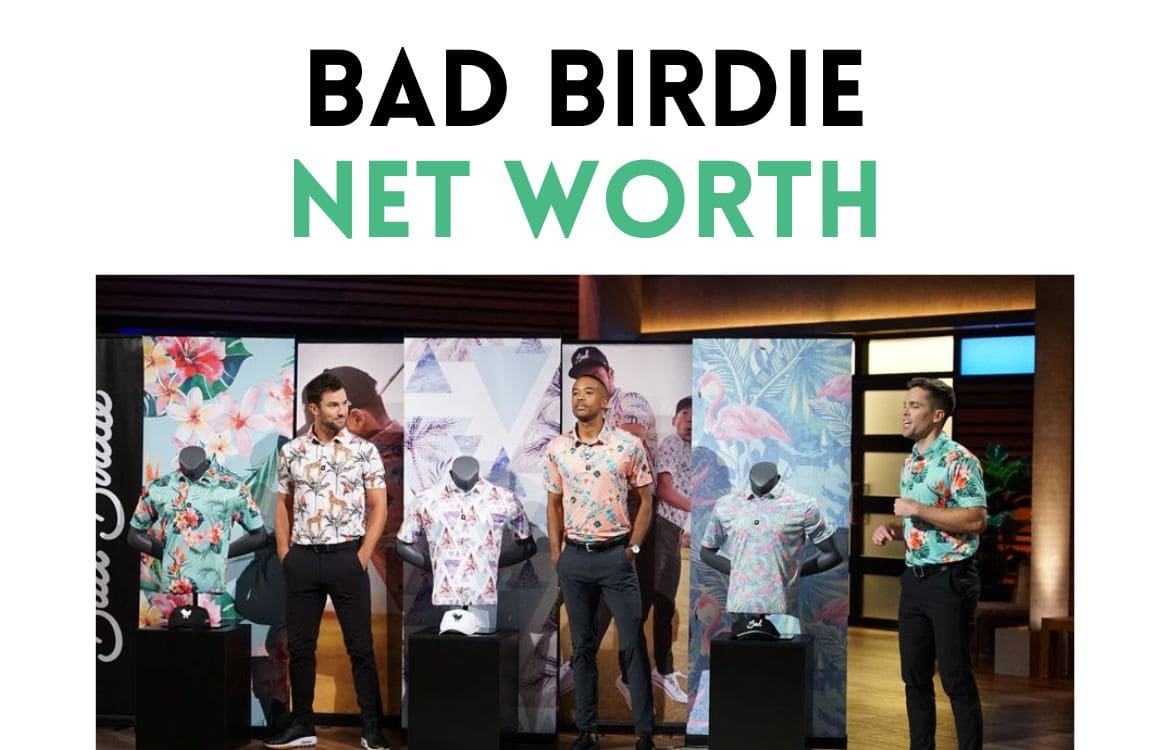
During Shark Tank Season 11, Jason pitched Bad Birdie to the Sharks. He walked into the Tank hoping to land an investment that would help him take his brand to the next level. He asked the Sharks for $300,000 in exchange for 10% equity in his company. Jason’s shirts were full of bright colors and bold patterns. He wanted to make golf exciting and bring a fresh vibe to the game.
Throughout the episode, Jason shared his vision, answered tough questions, and tried to convince the Sharks that his golf shirts were the future of golf apparel. His pitch was fun, full of energy, and showed his passion for changing the game. In the end, Jason found a Shark willing to take the risk with him. Keep reading to find out who made a deal and what happened next.
Bad Birdie Net Worth Shark Tank Update
Jason was looking for an investment of $300k in exchange for 10% equity in the company. At the time of the episode, he valued his company at $3 million. Jason successfully secured a deal with Robert for an investment of $300k for 20% equity in the company. The investment adjusted the company’s net worth to around $1.5 million. After the show was aired, the company experienced a strong boost in exposure and kept growing with an active 2026 store, new collections, and expanded apparel lines. As per my rough estimate, the current net worth of Bad Birdie is around $18 million.
Shark(s) name
Offer & Demand
Counteroffer
Accepted?
Robert Herjavec
$300,000 for 25% equity
$300,000 for 20% equity
Yes
Kevin O’Leary
$300,000 for 30% equity
N/A
No
Lori Greiner
Out
N/A
N/A
Mark Cuban
Out
N/A
N/A
Daymond John
Out
N/A
N/A
Jason Richardson Backstory + Their Initial Pitch
Jason Richardson loved golf, but he did not love what he saw in golf stores. Every time he walked in, he found the same old polos with no excitement or color. They were the same shirts golfers had been wearing for decades. Jason wanted something that looked and felt fresh. He wanted golf clothes that showed personality and made players feel confident on and off the course.
His inspiration came from his frustration with the options available in golf apparel. He decided to design shirts himself. He started learning about fabrics, patterns, and everything needed to make a great golf shirt.
In the early stages, Jason faced many problems. He had to figure out where to get quality fabrics. He also had to learn about manufacturing and production costs. He worked hard to keep costs low but still make high-quality shirts. There were moments when it felt like it would never work. But he kept pushing forward. His first designs sold out quickly. That gave him hope that he was on the right path.
When Jason walked into the Shark Tank, he carried with him the dream of bringing fun to golf. He introduced Bad Birdie as the solution for golfers who were bored with traditional clothes. His pitch was colorful, just like his shirts. He filled the stage with racks of bright, eye-catching polos. He explained that his shirts were performance wear, which meant they were moisture-wicking, antimicrobial, and comfortable to wear all day. He told the Sharks that each shirt cost him $40 to make.
He sold them for $72 each. He also shared that he used the “drop date” model, which is popular with some shoe brands. This model meant that he would release a limited number of shirts at a specific time, and they would sell out quickly. He told the Sharks that he made $412,000 in revenue the previous year. In the current year, he was on track to make $760,000.
Jason said he needed the $300,000 investment so he could buy more inventory. He was selling out of shirts and wanted to keep up with the demand. He also wanted to try selling his shirts in retail stores, but only a small part of his business. He planned to keep most of his sales online.
Queries + Shark’s Responses, and Final Deal
The Sharks were curious about different aspects of Jason’s business. Daymond John was the first to speak up. He asked why anyone would even want to play golf in the first place. Jason smiled and explained that his shirts were not just for golf. He said they were stylish enough to wear anywhere, whether on the golf course or at dinner with friends.
His goal was to create versatile shirts that people loved wearing in any setting. Daymond understood Jason’s passion but did not think golf was the best market for him. He eventually decided to drop out.
Kevin O’Leary was interested in the business numbers. He wanted to know why Jason wanted to sell his shirts in retail stores. Kevin worried that retail would destroy the success of his “drop date” model. He offered Jason $300,000 but asked for 30% equity instead of 10%. He also demanded that Jason never expand into retail. Kevin explained that he thought retail would ruin the brand’s exclusivity.
He wanted Jason to focus only on online sales, where he was already doing well. Jason thanked Kevin for the offer, but was not ready to give up on retail completely.
Lori Greiner watched the pitch carefully. She thought the shirts looked great, but she believed the other Sharks would be more interested than she was. She told Jason that she was not going to make an offer. She explained that golf apparel was not a space she knew well, and she did not want to invest in something she could not fully support.
Mark Cuban listened to Jason’s explanation about retail plans. He did not like the idea of mixing online “drop date” sales with retail. He thought adding retail would hurt the excitement of limited releases. Mark told Jason that he did not want to invest because he could not see the long-term growth potential if retail was involved. He decided to drop out, too.
Robert Herjavec asked Jason about his plans for using the investment money. Jason said he needed it to buy more inventory so he could meet demand. He also wanted to explore putting a small number of his shirts into retail stores. Robert liked the energy Jason brought to his pitch. He liked the idea of colorful shirts that could make golf more fun. Robert offered Jason $300,000 for 25% equity. Jason wanted to negotiate. He asked Robert if he would consider 20% equity instead. Robert shook his head and said he could not lower it.
Then Jason came up with a creative way to seal the deal. He challenged Robert to a putting contest right there in the Tank. If Robert made the putt, Jason would give him 25% of the business. If Robert missed, Jason would give him only 20%. Robert laughed and agreed to the challenge. Everyone watched as Robert lined up the shot. He missed the putt, which meant Jason got his wish for 20% equity.
Kevin O’Leary tried to join in by making his own putt, but he missed, too. In the end, Jason accepted Robert’s offer for $300,000 in exchange for 20% equity.
Product Availability
Bad Birdie shirts are made with performance fabrics that keep golfers comfortable on the course. They are antimicrobial, which means they help stop bacteria from causing bad smells. They are moisture-wicking, so they pull sweat away from the body to keep golfers cool and dry. Each shirt is made to feel soft and flexible. The designs are what really set Bad Birdie apart. The shirts feature bright, bold prints that you will not see in traditional golf stores.
There are shirts with tropical flowers, geometric shapes, and even animal prints. These designs help golfers express their personality and have fun.
The shirts are available for purchase directly on the Bad Birdie website. This site offers the newest collections and limited-edition designs. The shirts sell out fast, especially when Jason drops a new design. Bad Birdie also has a section where customers can buy hats, sweaters, and other accessories to match the shirts. The price for each shirt is around $72, which is considered a fair price for high-quality performance golf wear.
The company sometimes runs promotions or sales, but most shirts sell at full price because demand is high. Bad Birdie’s website ships to many countries, making it easy for golfers around the world to get their hands on these unique shirts.
What Happened To Bad Birdie After Shark Tank?
After appearing on Shark Tank, Bad Birdie continued to grow. The exposure from the show helped the brand reach a wider audience. Many people who watched the episode were excited to buy a shirt and show off their new style on the course. The company’s website saw a big jump in traffic, and sales increased quickly. Even though Bad Birdie faced some challenges during the COVID-19 pandemic, they were able to recover.
Inventory delays and supply chain problems affected many small businesses, but Bad Birdie worked through these issues. By staying focused on limited-edition drops, they kept customers excited and engaged.
As of today, Bad Birdie is still in business and stronger than ever. Reports show their yearly revenue is between $6 million and $7 million. That is a huge jump from when Jason first went on Shark Tank. The company has also expanded its offerings. In addition to polos, Bad Birdie now sells women’s golf shirts, hats, outerwear, and other accessories. They have even started a sponsorship program.
High school golf teams can apply to have Bad Birdie sponsor them by providing shirts for their players. This program helps support young golfers and brings fresh energy to golf at the high school level. The brand’s social media pages are active, posting new designs and connecting with fans every day. Customers share photos of themselves wearing Bad Birdie shirts, helping spread the word. Overall, Bad Birdie’s future looks bright.
Conclusion
Bad Birdie’s journey on Shark Tank shows how passion and creativity can change an industry. Jason Richardson saw that golf clothes were boring and decided to do something about it. His colorful, bold designs brought a fresh look to the sport and helped golfers feel confident on the course. His pitch in the Tank was full of energy and excitement.
Although some Sharks dropped out, Robert Herjavec believed in Jason’s vision and offered him $300,000 for 20% of the business. Jason accepted the deal after a fun putting competition that made the episode memorable.
Since Shark Tank, Bad Birdie has continued to grow. The company overcame pandemic challenges and now makes millions in annual revenue. Their website is full of colorful shirts that sell out fast. Their high school sponsorship program helps young golfers feel proud of what they wear. Bad Birdie proved that even in a traditional industry like golf, there is always room for innovation.
Jason’s dream of making golf more exciting is now a reality, and Bad Birdie is thriving. Whether you play golf or not, these shirts remind everyone that being bold and different can lead to success.
Hey, I’m Amna Habib, an undergraduate student pursuing a Bachelor’s in Business Administration. Shark Tank has always been one of my favorite TV shows because it offers a unique glimpse into the world of entrepreneurship. The way entrepreneurs present innovative solutions to everyday problems aligns with my academic interests and fuels my curiosity about business strategies. Each pitch showcases creativity and strategic decision-making, which I find both insightful and inspiring. Watching the show has deepened my passion for business and motivated me to explore the world of entrepreneurship even further. Beyond business and writing, I love food, shopping, and spending time with my friends and family.