Today, many people want to help the environment but feel stuck. People who live in apartments or small homes often can’t install big solar panels on their roofs. Solar panels can save money on electricity and reduce carbon emissions, but they need space, permission from landlords, or lots of money upfront. Because of these problems, many city dwellers feel left out of the green energy movement.
They wish they could do something small to make a difference, but there aren’t many options that work for them. That is why people end up feeling helpless when they think about climate change. They want to contribute to a better world but don’t know where to start.
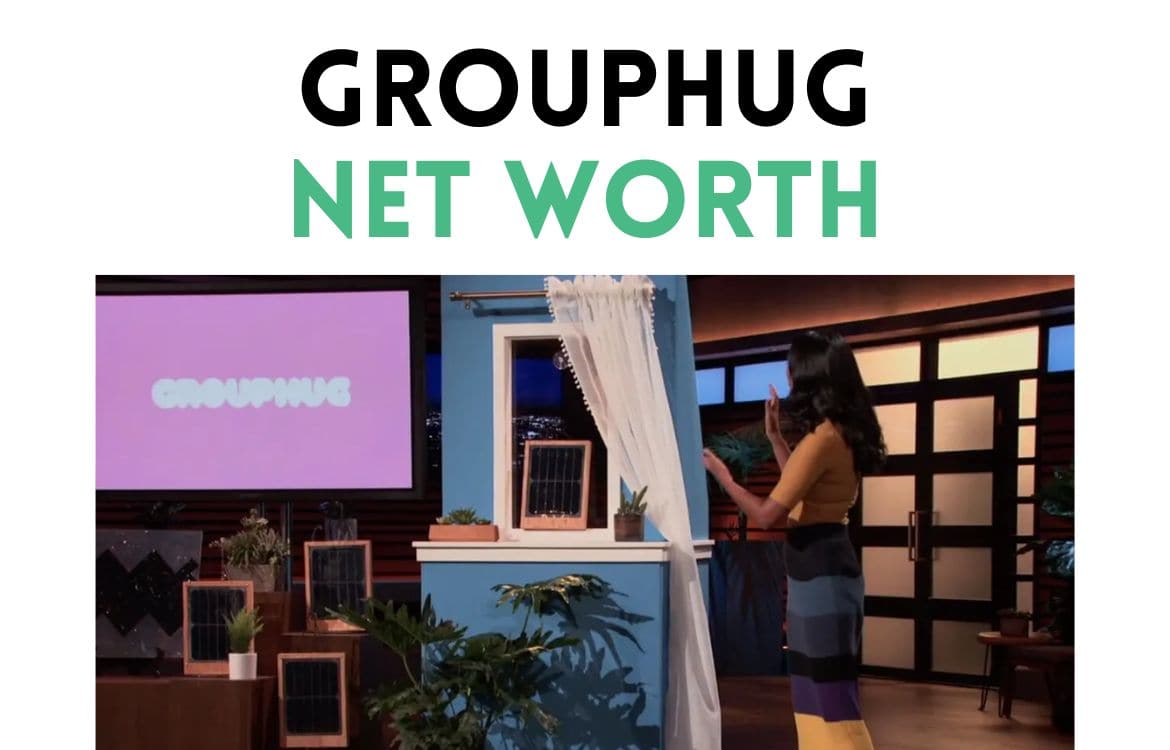
Krystal Persaud understood this struggle deeply. She wanted to give people an easy way to use solar power, even if they lived in a tiny apartment with no yard or roof. She designed Grouphug, a solar panel you can hang in your window. It collects sunlight and charges your devices through a USB port. It’s small, affordable, and easy to use. Krystal appeared on Shark Tank Season 11 with her idea.
She asked the sharks for $150,000 in exchange for 10% equity. Her idea was bold and hopeful, but she had few sales to prove it would work. Would the sharks invest in her vision or see it as too risky? This episode revealed what they thought and showed how one person’s idea could spark hope for greener living.
Grouphug Net Worth Shark Tank Update
Krystal was looking for an investment of $150k in exchange for 10% equity in the company. At the time of the episode, she valued her company at $1.5 million. Krystal successfully secured a deal with Mark for an investment of $150k for 25% equity in the company. The investment adjusted the company’s net worth to around $600k. After the show was aired, the company experienced a good boost in exposure and later stayed active through its online store and branded solar products, but it appears to have remained a small business. As per my rough estimate, the current net worth of Grouphug is around $1 million.
Shark(s) name
Offer & Demand
Counteroffer
Accepted?
Mark Cuban
$150,000 for 25% equity
N/A
Yes
Kevin O’Leary
Out
N/A
No
Barbara Corcoran
Out
N/A
No
Rohan Oza
Out
N/A
No
Lori Greiner
Out
N/A
No
Krystal Persaud Backstory + Their Initial Pitch
Krystal Persaud always cared about technology and design. She wanted to make products that helped people and the planet. While working with solar panels, she realized that regular panels were huge, expensive, and complicated. Many people who lived in apartments wanted solar energy but couldn’t install big panels. This frustrated Krystal, so she thought about how to bring solar power to small spaces.
She came up with Grouphug, a solar panel in a pretty bamboo frame that hangs in your window. It uses the sun’s energy to charge any USB-powered device, like your phone or tablet.
Krystal’s journey wasn’t easy. She launched a Kickstarter campaign in 2018 to raise money. She raised $80,000, which showed people loved her idea. But when it came time to make the product, she ran into big problems. Factories couldn’t deliver on time. There were mistakes in production. By the time she went on Shark Tank, she still hadn’t shipped products to her Kickstarter backers.
This made her nervous because she wanted to show the sharks proof that people wanted her solar panels. But all she had were prototypes and her passion.
On the show, Krystal introduced herself with a big smile. She explained how Grouphug worked and why it was special. She talked about how her panels were perfect for apartment dwellers who wanted to help the environment. She showed the sharks the sleek bamboo frame and described how it could charge any device through USB. She asked for $150,000 in exchange for 10% of her company.
Her pitch was clear and heartfelt. She wanted to make solar power easy and accessible. She told them she already made art installations out of solar panels, like her famous Solar Cat that was featured in a museum. But she admitted that sales were basically zero since she had not shipped any products yet. The sharks listened carefully, but some looked worried about the lack of sales.
Queries + Sharks’ Responses, and Final Deal
Kevin O’Leary was the first to question Krystal. He asked why anyone would buy Grouphug when solar panels are cheap and everywhere. He told Krystal that solar panels are a commodity, which means they are widely available and not unique. He said that he didn’t see how Grouphug could stand out enough to build a successful business. Kevin said he couldn’t see a good path forward for making money, so he decided he was out.
Barbara Corcoran shared her opinion next. She told Krystal that the design of Grouphug was not attractive enough. She said it looked ugly hanging in the window, and worried that people wouldn’t want to see it every day in their homes. Barbara added that the lack of sales was concerning. She didn’t want to risk her money on something that hadn’t proven it could sell, so she went out.
Lori Greiner was very direct with her feedback. She told Krystal that she wasn’t sure if there was even a market for Grouphug. She said she didn’t know if people actually wanted a small window-hanging solar panel. Without clear proof that customers were excited to buy it, Lori said she wasn’t interested in investing, so she dropped out, too.
Rohan Oza asked Krystal if she had a patent to protect her product. Krystal explained that she didn’t have a patent because her product used existing solar technology arranged in a new way. Rohan said he likes to invest only in products with patents because they keep competitors away. Without a patent, he felt Grouphug could be copied easily, so he decided he was out.
That left only Mark Cuban. Mark told Krystal he admired her vision. He liked that she wanted to make a difference in the environment and bring solar power to people who couldn’t install big systems. But he also said the product needed a lot of work before it could sell well. Mark offered Krystal $150,000 in exchange for 25% equity instead of the 10% she originally wanted to give.
Krystal hesitated. She tried to negotiate for a lower equity percentage. But after thinking about it, she realized Mark was her only chance. She accepted his offer with a smile. The sharks applauded her decision, and Krystal looked happy and relieved.
Product Availability
The Grouphug solar panel is designed to hang inside any window using suction cups. It has a small solar panel in a bamboo frame. This bamboo frame makes the product look stylish and natural. The panel collects sunlight during the day. You plug your device into the built-in USB port, and it starts charging from the energy stored in the panel’s battery.
The panel produces enough power to fully charge small devices like phones or headphones after a day in the sun. It works best in sunny windows where the panel can collect light for several hours.
Krystal wanted Grouphug to be affordable so that more people could use solar energy. The original retail price was about $150. Customers could buy the product from the Grouphug website. For a while, Grouphug panels were also available on online retailers like The Grommet. But soon after Shark Tank aired, the products started selling out. This was partly because people were excited about the show.
It was also because production delays made it hard for Krystal to keep enough inventory. After the pandemic hit, supply chain problems got worse. At the time of writing, the Grouphug website shows the panels as sold out, and they are not available on other online shops. There are no updates on when new stock will arrive. This has left many customers waiting and hoping for a restock.
What Happened To Grouphug After Shark Tank?
After Shark Tank aired, Grouphug got a lot of attention. People loved the idea of a small solar panel for their apartments. There were positive stories about Grouphug in big magazines like Today, CNBC, and People Magazine. In September 2020, Grouphug finally shipped the Kickstarter rewards after long delays. Customers who backed the project were happy to receive their panels.
The company received praise for finally delivering on promises. But supply chain issues made it difficult to keep products in stock. The pandemic caused many factories to shut down or reduce work, which hurt Grouphug’s ability to make new panels.
Since then, Grouphug panels have often been sold out. The company has released small batches of panels, but they sell out quickly. This shows there is demand for the product, but production problems limit growth. Social media posts from Grouphug show Krystal continuing to promote solar energy and environmental awareness. But as of 2024, Grouphug has not expanded beyond the original window-hanging solar panel.
There are no signs of new products or big partnerships. The website is still up, but panels are out of stock most of the time. There are no updated sales numbers since the Shark Tank episode. The deal with Mark Cuban appears to have closed, but it’s unclear how much he is involved day-to-day.
Krystal still posts about Grouphug on social media, and there is a small community of fans cheering for the company. However, without a stable inventory, it’s hard for Grouphug to grow. If they can solve supply chain issues, they might have a chance to expand and introduce new products. For now, Grouphug remains a small company with a big idea that has yet to reach its full potential.
Conclusion
Krystal Persaud came to Shark Tank with a big dream and a small solar panel. She wanted to help people use solar energy in their apartments by creating Grouphug, a window-hanging solar panel. The sharks liked the idea, but most were worried about the lack of sales, design concerns, and no patent protection.
Kevin O’Leary, Barbara Corcoran, Lori Greiner, and Rohan Oza all dropped out because they felt the risks were too high. Mark Cuban saw potential and offered Krystal $150,000 for 25% equity, which she accepted after a short negotiation.
After Shark Tank, Grouphug shipped Kickstarter rewards and got positive press. But inventory problems and the pandemic made it hard for the company to keep products available. As of 2024, Grouphug’s panels are sold out on the website, and there are no clear signs of big growth. Grouphug’s journey shows how even great ideas need strong supply chains and planning to succeed.
But it also proves that one person’s vision can inspire people to think differently about clean energy, even if the road ahead is challenging.
Hey, I’m Amna Habib, an undergraduate student pursuing a Bachelor’s in Business Administration. Shark Tank has always been one of my favorite TV shows because it offers a unique glimpse into the world of entrepreneurship. The way entrepreneurs present innovative solutions to everyday problems aligns with my academic interests and fuels my curiosity about business strategies. Each pitch showcases creativity and strategic decision-making, which I find both insightful and inspiring. Watching the show has deepened my passion for business and motivated me to explore the world of entrepreneurship even further. Beyond business and writing, I love food, shopping, and spending time with my friends and family.